lead-generation
15 min read
Top Social Media Marketing Tips for Local Businesses That Actually Drive Results
Increased local brand visibility and discoverability across social platforms and location-based searches

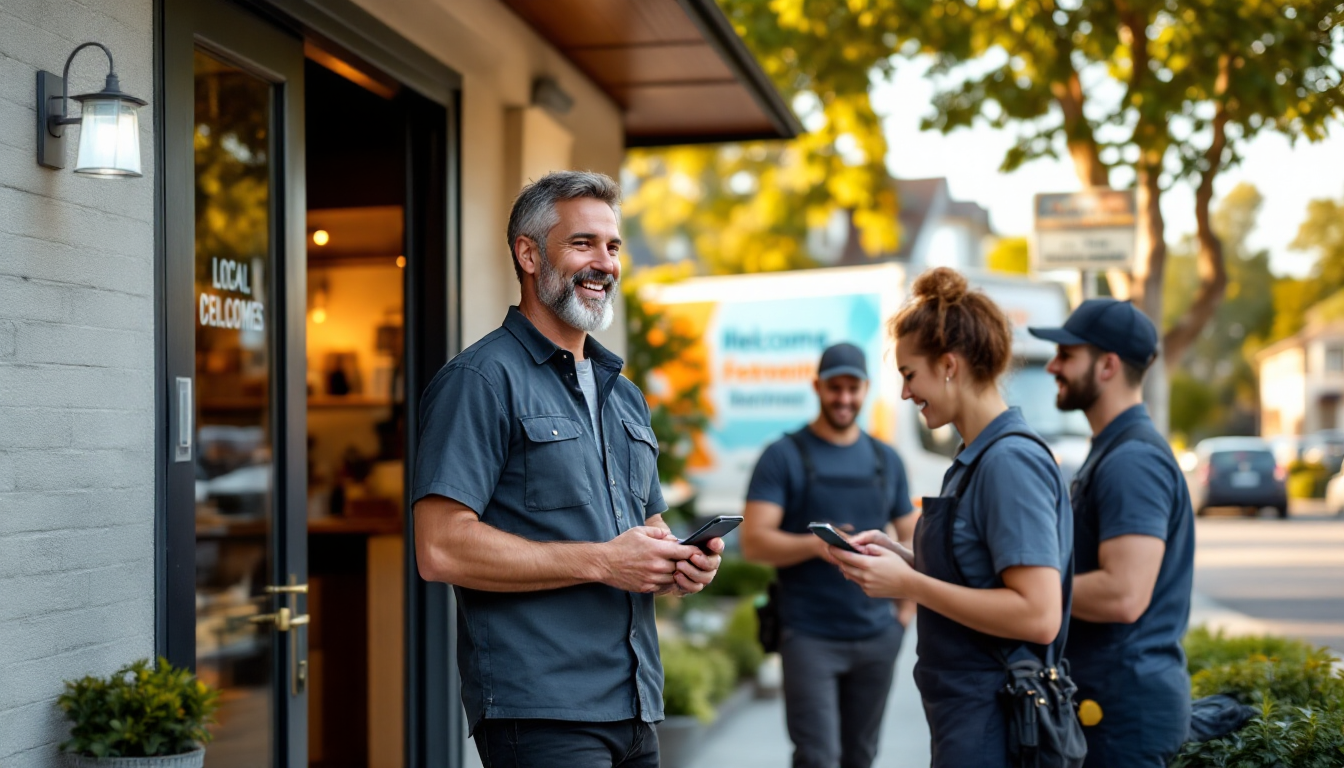
You posted something on Instagram three weeks ago. Before that, a Facebook update in early November. Your last story? You can't even remember. Sound familiar? You're not lazy or disorganized. You're running an actual business, fielding calls, managing crews or appointments, and trying to keep customers happy. Social media keeps sliding to the bottom of the list because it doesn't feel urgent until a competitor starts showing up everywhere and you're nowhere to be found.
Here's what most social media advice gets wrong for local businesses: it's written for brands with full marketing teams, not for the HVAC owner who's also the dispatcher, or the salon owner who does color until 7pm. The tips in this post are built for real operational constraints. Pick the right platforms, get your profiles doing actual work, show up consistently without burning out, and turn followers into customers. That's the whole game.
No fluff. Just what works for local businesses that need social media to pull its weight.
Which Social Platforms Should Local Businesses Actually Use?
Stop trying to be on every platform. That's the single most common mistake local business owners make, and it's why social media feels exhausting and produces nothing. You don't need TikTok, LinkedIn, Pinterest, Twitter, Instagram, and Facebook. You need two platforms, maybe three, where your actual customers spend time.
For most local service businesses, Facebook and Instagram are the non-negotiables. Facebook's geo-targeting for paid ads is genuinely powerful at the local level. You can put your message in front of homeowners within a five-mile radius of your shop, filter by age, income bracket, and home ownership status, and spend a modest budget to get real results. Instagram is where visual proof lives. Before-and-after photos, finished projects, happy customers, your team at work. If your service has any visual component at all, Instagram is worth your time.
Don't sleep on Nextdoor if you're in home services, landscaping, cleaning, or real estate. Nextdoor connects you directly with neighborhood-level audiences who are actively asking each other for recommendations. A recommendation from a neighbor on Nextdoor carries weight that a Google ad simply can't replicate. People trust their neighbors.
Pick your two platforms. Get good at them. Ignore everything else until you're consistently posting and seeing engagement. Spreading yourself thin across five platforms means you're doing nothing well.
Is Your Social Media Profile Optimized for Local Search?
Your social media profiles are local SEO assets, and most business owners treat them like business cards they handed out once and forgot about. Every platform profile you have, Facebook Business Page, Instagram bio, Nextdoor profile, is a place Google can find and rank. That means an incomplete or inconsistent profile isn't just a missed opportunity. It's actively working against you.
The first thing to check is your NAP: Name, Address, Phone number. Consistent NAP information across every platform improves your local search rankings. If your Facebook page says "Get Amplified Marketing" but your Google Business Profile says "Get Amplified Mktg," that inconsistency creates confusion for search algorithms. Go through every profile and match them exactly.
Next, look at your bios and descriptions. Are you using local keywords? "HVAC repair in Fort Lauderdale" performs better than just "HVAC repair" because it tells both the algorithm and the reader exactly who you serve. Add your city, your neighborhood, your service area. Fill out every field the platform offers: hours, services, website link, category tags. Most people fill out maybe 60% of a profile and call it done. That missing 40% is where your competitor gets the edge.
If you want to see exactly how your business appears across search and social, get your free visibility audit here. It's a fast way to find the gaps without spending hours auditing yourself.
How Do You Build Real Community Presence on Social Media?
The businesses that win on social media locally aren't the ones that post the most. They're the ones that show up as actual community members, not just advertisers. There's a real difference, and your audience feels it immediately.
What does that look like in practice? Share local events your customers would care about. Congratulate a neighboring business on their anniversary. Comment on the local high school football team's big win. Post about a charity drive you're participating in. None of this requires a big budget or a marketing degree. It requires five minutes and genuine interest in the community you serve.
Collaborating with complementary local businesses is one of the most underused growth tactics available. A plumber and an HVAC company serve the same homeowners. A salon and a bridal boutique serve overlapping customers. Cross-promote each other's content, run a joint giveaway, tag each other in relevant posts. Both audiences benefit, and both businesses grow their reach without spending anything on ads.
When you position yourself as a local stakeholder rather than just a vendor, word-of-mouth referrals follow. People recommend businesses they feel connected to. They refer the contractor who commented on the neighborhood Facebook group, not the one who only posts promotional graphics. Be the business people feel like they actually know.
Quick win you can do today: find three local community Facebook groups relevant to your service area. Join them. Spend ten minutes answering questions or making genuine comments. Don't pitch your business. Just be helpful. Do this twice a week for a month and watch what happens.
How Do You Get Customers to Create Content and Reviews for You?
User-generated content is the most credible marketing you can get, and it costs you almost nothing to generate it. A customer tagging your business in a photo of their finished bathroom remodel is worth more than any ad you could write, because nobody paid for it and everyone knows it.
You have to ask. Most customers who had a great experience won't think to tag you unless someone prompts them. Train your team to mention it at the end of every job. Send a follow-up text that says "Would love to see your photos. Tag us and we'll share it." Put a small card in your packaging or leave-behind materials with your Instagram handle and a simple ask. Make it easy and make it normal.
Actively responding to reviews on social platforms is a reputation management strategy, not just good manners. Every response you write is visible to everyone who reads that review. A thoughtful reply to a critical review can actually win more customers than a five-star review without a response. New customers are watching how you handle problems as much as they're reading the positive feedback. Respond to everything. Thank the good reviews, address the concerns in the critical ones, stay professional always.
The businesses that treat reputation management as a passive activity, just hoping for good reviews, fall behind the ones that actively generate and respond to them. If you want a system that automates review requests and helps you stay on top of responses, our reputation management tools are built exactly for this. Check them out.
Do Geotags and Local Hashtags Actually Help?
Yes, and most local businesses skip them entirely because they seem too simple to matter. They matter. Geotagging a post connects it to a location-based discovery feed. When someone in your area searches for a restaurant, a contractor, or a salon on Instagram, geotagged content from businesses in that area can surface. You're essentially raising your hand and saying "we're right here" to people already looking in your neighborhood.
The setup is simple. When posting on Instagram, tap "Add Location" and tag your business or your city. On Facebook, check in at your location or tag it in the post. That's it. Two taps. Do it every time.
Local hashtags work the same way by filtering your content to a relevant community audience without any paid spend. Research hashtags specific to your city and industry. A roofing company in Miami might use #MiamiRoofing, #SouthFloridaHomes, or #MiamiContractor alongside broader tags. Aim for a mix of high-volume local hashtags and smaller, more specific ones where you have a realistic chance of standing out.
Quick win: go to your last five Instagram posts right now. Add a geotag if you didn't have one. Edit the captions to include two or three local hashtags. It takes ten minutes and immediately expands your organic reach on existing content. No new content required.
How Do You Stay Consistent Without Burning Out?
Inconsistent posting is the most common way local businesses quietly disappear from their customers' awareness. You post three times in one week when things are slow, then nothing for three weeks when you're busy. Your audience forgets you exist. The algorithm deprioritizes your content. You're starting from scratch every time.
A content calendar fixes this. Not a complicated one. A simple document or spreadsheet with four content categories works fine for most local businesses:
- Behind-the-scenes content: Your team at work, a time-lapse of a project, a day-in-the-life post. People connect with people, not logos.
- Customer success stories: Before-and-after photos, testimonials, project highlights. Social proof that speaks for itself.
- Educational tips: Answer the questions your customers ask repeatedly. A plumber explaining when to call versus DIY, a salon owner explaining how to maintain a color treatment. Useful content builds authority.
- Community and local content: Local events, shoutouts to neighboring businesses, relevant neighborhood news. Keeps you rooted in the community.
Rotate through these four categories and you'll never stare at a blank phone screen again wondering what to post. Aim for three to four posts per week. Consistency beats frequency. Three solid posts every week outperforms seven mediocre ones followed by a two-week silence.
Batch your content creation. Set aside two hours on a Sunday or Monday morning and create a week's worth of posts at once. Schedule them through Facebook's native scheduler or a tool like Meta Business Suite. Done. You can run your business all week without touching social media except to respond to comments.
How Do You Measure Whether Social Media Is Actually Working?
If you're not tracking metrics, you're guessing, and most people who guess eventually give up on social media because they can't tell what's working. The businesses that grow on social are the ones that treat it like any other marketing investment and ask: what's the return?
The metrics that matter for local businesses aren't follower counts. Followers are vanity. Focus on:
- Engagement rate: Are people liking, commenting, sharing, and saving your posts? Engagement signals that your content is actually connecting.
- Reach and impressions: How many unique people saw your content? Is that number growing month over month?
- Profile visits and website click-throughs: Are people clicking to learn more? This is where social media starts converting to business.
- Direct messages and inquiries: How many leads or questions are coming in through social platforms directly?
Pull these numbers once a month. Look at which posts got the most engagement and replicate that content type. Cut what's getting ignored. Shift time and budget toward what's actually producing clicks and inquiries. A monthly 30-minute review session separates businesses that plateau from those that grow on social media.
If you want a clearer picture of how your entire online presence performs, including social, search, and maps, our local SEO tools give you that visibility in one place.
When Should Local Businesses Use Paid Social Ads?
Paid social advertising on Facebook and Instagram can accelerate local customer acquisition significantly, but only when your organic foundation is solid first. Running ads to a half-finished profile with no reviews and three posts from six months ago is burning money. Get the basics right, then add paid reach on top.
When you're ready, here's how to approach it:
- Define your geographic target: Set a radius around your business or target specific zip codes where your best customers live. Facebook's geo-targeting is precise enough to target specific neighborhoods.
- Build a custom audience: Upload your customer list to create a Lookalike Audience. Facebook finds new people who share characteristics with your existing customers. This is the fastest path to relevant reach.
- Run a clear offer: "Free estimate," "Book online today," "Limited appointments available this month." Give people a reason to act now, not someday.
- Track cost-per-lead: Know what you're spending to generate each inquiry. If you're spending too much per lead, adjust the creative, the audience, or the offer before increasing budget.
- Review weekly: Local ad campaigns need active management. A campaign that's working in week one might plateau in week three. Stay on top of it.
Even a modest monthly budget can produce real results when campaigns are structured correctly and monitored consistently. The goal is always measurable cost-per-lead, not impressions or clicks that don't turn into customers. Our AI marketing tools can help automate parts of this process and keep campaigns performing without requiring daily manual attention.
Why Choose Get Amplified Marketing?
Get Amplified Marketing builds AI-powered marketing systems for local businesses. Not generic digital marketing. Systems designed specifically for the operational reality of running a local service business where you can't afford to hire a full marketing department but can't afford to be invisible either.
We handle the pieces that local business owners consistently struggle to maintain: consistent visibility across search, maps, and social; automated lead capture so you never miss an inquiry; reputation management that generates and monitors reviews without manual effort; and smart websites built to convert visitors into customers. Our clients get full-stack visibility, meaning when someone in your area searches for your service on Google, asks an AI assistant for a recommendation, or looks you up on social media, you show up. Ready to see where you stand right now? Get your free visibility audit and find out.
The Bottom Line
Here's what matters: Social media works for local businesses when you stop trying to do everything and start doing the right things consistently. Pick two platforms, optimize your profiles for local search, post on a schedule, engage with your community genuinely, and track what's actually driving customers through your door. That's the whole strategy.
Ready to get found? Get your free visibility audit and see exactly where your business stands in search, maps, and AI. Or book a strategy call to talk through your goals.
Frequently Asked Questions
How often should a local business post on social media?
Three to four times per week is the sweet spot for most local businesses. Posting daily is rarely necessary and often leads to burnout and lower-quality content. Consistency matters more than frequency. Three strong posts every week will outperform seven rushed ones every time, because the algorithm rewards engagement rate, not just volume, and your audience will tune out content that doesn't add value.
What type of content gets the most engagement for local businesses?
Behind-the-scenes content and customer success stories consistently outperform purely promotional posts for local businesses. People want to see the team, the process, and the real results. Before-and-after photos, employee spotlights, and short videos of work in progress tend to generate the most comments and shares. Educational posts that answer common customer questions also perform well because they establish expertise while being genuinely useful.
Do I need a separate business account or can I use my personal profile?
Always use a dedicated business account. On Facebook, create a Business Page. On Instagram, switch to or create a Business or Creator account. Business accounts give you access to analytics, paid advertising tools, contact buttons, and scheduling features that personal profiles don't have. They also look more professional to potential customers who look you up, and they allow customers to leave reviews and check in at your location.
How do geotags actually help local businesses get found?
When you geotag a post, Instagram and Facebook associate that content with a specific location. Posts appear in location-based search results and discovery feeds when users browse by area. For local businesses, this means your content can surface organically to people who are physically nearby or actively searching for businesses in your neighborhood. It's a free way to extend your reach to genuinely relevant local audiences without running paid ads.
How do I turn social media followers into actual paying customers?
The gap between followers and customers usually comes down to a clear call to action and a frictionless next step. Every post doesn't need a hard sell, but your profile should always make it obvious what to do next: call, book online, request a quote. Include a direct link in your bio that goes to a booking page or contact form, not just your homepage. Use stories and posts periodically to present a specific offer with a deadline. And respond to every comment and direct message quickly, because social media inquiries that go unanswered for hours frequently go to a competitor instead.
Related
More on lead-generation.

Ready to grow your business?
See where you're losing leads, or book a free strategy call with our team.
Free · 2 minutes · No email required